Our Cheeses
Cantabria is a land deeply rooted in cheese-making. From the coastline to the green valleys and high mountain areas, the region has forged a unique cheese tradition over centuries. The combination of exceptional pastures, livestock farming closely linked to the land, and know-how passed down from generation to generation has resulted in a diversity that is now recognized both within and beyond Spain.
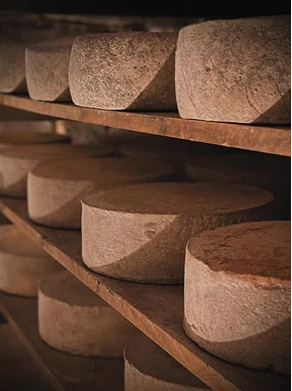
The diversity of formats, production methods, and ageing times makes each cheese a unique expression of the landscape that inspires it and of the people behind it. Taken together, these productions position Cantabria as a leading cheese region, capable of captivating those who seek authentic flavors, strong character, and a direct connection to the land.

Protected Designations of Origin (PDO)

“The smoothness that defines Cantabrian flavor.”
The PDO Queso Nata de Cantabria protects a traditional cheese produced in most of the region, except in the basins of the Urdón and Corvera rivers and the municipalities of Tresviso and Bejes. It is made exclusively from whole Frisian cow’s milk sourced from farms closely linked to the territory and subject to strict quality controls.
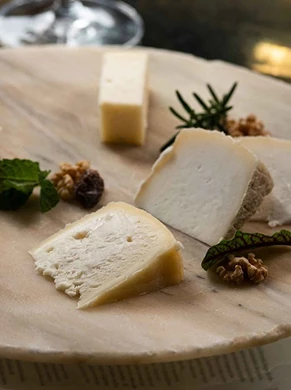
Salting is carried out by immersion in brine, followed by a minimum ageing period of seven days. It may be presented in cylindrical or parallelepiped shapes, with a thin, pale rind. Its paste is creamy, compact, and without holes, with a mild aroma and a distinctive milky, buttery flavor.
This cheese represents the mildest and most approachable profile among Cantabria’s protected cheese varieties, complementing more intense styles such as Picón Bejes-Tresviso or the Quesucos de Liébana PDO.
“Small in size, immense in character.”
The Quesucos de Liébana Protected Designation of Origin (PDO) protects traditional cheeses made in the Liébana region, which includes the municipalities of Potes, Pesaguero, Cabezón de Liébana, Camaleño, Cillorigo de Liébana, Tresviso, Vega de Liébana, and the municipality of Peñarrubia. This area reflects the region’s rich history of livestock farming and cheesemaking.
These are small cheeses, cylindrical or disc-shaped, made with whole or pasteurized cow’s, sheep’s, goat’s, or mixed milk. Salting is done dry, and they are aged for one to two months.
They have a hard, slightly moldy rind and a firm, compact, and aromatic paste, yellowish in color with small eyes. A smoked version is also available, which adds a more intense aroma and flavor, making them one of the most recognizable cheeses of the Cantabrian high mountains.
“The imprint of the mountain that awakens the senses.”
The Picón Bejes-Tresviso Protected Designation of Origin (PDO) protects one of Spain’s most unique blue cheeses, made with raw cow’s, sheep’s, goat’s, or mixed milk. Production is concentrated in the municipalities of Liébana and Peñarrubia, with Bejes and Tresviso being the traditional centers of this designation.
Salting is done dry, and maturation takes place in the region’s natural limestone caves, where humidity and air currents favor the characteristic development of the blue mold. The minimum maturation time is two months, although it can be extended to intensify its nuances.
It has a cylindrical shape, with variable weight and size, a soft, slightly oily rind with gray tones, and a very creamy white paste veined with blue. Its flavor is powerful and slightly spicy, with a deep aroma that makes it one of the most recognizable cheeses in Cantabria.
Other Types
Controlled Quality
This label complements the Protected Designations of Origin (PDOs) and artisanal productions, broadening the diversity and quality of cheeses that distinguish Cantabria as a leading cheese-producing region.
Products awarded the “CC Controlled Quality” seal have demonstrated to ODECA that they meet higher standards in terms of raw material origin, production processes, and quality controls. This distinction guarantees consumers a superior level of quality within Cantabria’s wide agri-food offering.
Cured Sheep’s Milk Cheese
In the case of cheeses, the certification covers products made from raw sheep’s milk, with a pressed paste, and subjected to strict aging periods that enhance their character. These cheeses must be aged for at least 60 days when their weight is 1.5 kg or less, and for a minimum of 120 days when they exceed this weight, thus ensuring firm textures, complex aromas, and a fully developed flavor.
Mountain Product
“Mountain Product” is an optional quality term approved by the European Parliament in 2014. It refers to food products whose raw materials are produced in mountain areas and whose processing must also take place in mountain areas or within a maximum distance of 30 km from them.
Follow us and become part of our community